A garage door can evaluate anywhere from roughly 130 pounds for a small insulated steel door to well over 300 extra pounds for a huge wood or commercial setting up. That weight is manageable only because the springtime system does the real lifting. When a spring breaks, loses stress, or is adjusted inaccurately, the door stops acting like a balanced machine and begins imitating a blunt pressure hazard.
Property owners frequently discover the issue when the door unexpectedly really feels hefty, the garage door opener stress, or the door climbs a few inches and slams closed. Then, many people begin looking for garage door repair suggestions and ask yourself whether spring job is a practical do it yourself work. After years around domestic garage door repair and business garage door repair calls, my sight is simple: springtime replacement is entitled to a high level of caution, and for the majority of owners it belongs in professional hands.
That does not indicate homeowner must remain ignorant. The best customers I work with are the ones that understand what the springtimes do, recognize the warning signs early, safeguard the location effectively, and understand when to quit. Profundity stops injuries, safeguards the door system, and commonly keeps a small repair work from turning into a full garage door installation.
Why spring substitute is different from various other garage door work
Many garage door tasks are fairly low danger. Replacing remote batteries, cleansing picture eyes, oiling rollers, or resetting a garage door opener after a power interruption normally falls under the regular maintenance category. Spring replacement is not routine maintenance.
A torsion spring or extension springtime shops a significant quantity of mechanical energy. That energy is what counterbalances the door. If it is launched in a regulated manner, the door functions efficiently. If it is released all of a sudden due to a slipped winding bar, a failed brace, a negative collection screw, or an improvisated device, components can move with sufficient pressure to damage fingers, lacerate hands, damages cars, and in extreme situations create life altering injuries.
The danger is not limited to the springtime itself. When the counterbalance is gone, the door comes to be unsteady. A separated opener trolley, a torn cable, or a slanted base section can produce a domino effect. I have actually seen a property owner eliminate a spring just to locate the door was no more supported equally, causing one side to go down and twist the entire setting up. What started as a spring concern turned into bent tracks, harmed panels, and a substitute price quote far more than the original repair.
Know which type of spring system you have
Most property owners have one of two systems: torsion springs placed on a shaft above the door opening, or extension springs that stretch along the straight tracks. Torsion systems are common on more recent doors and normally provide smoother procedure and longer cycle life. Extension systems are still discovered on many older homes and light responsibility applications.
The security considerations differ. Torsion springtimes lug torque around a shaft and are wound under stress using specific bars. Extension springs stretch and contract, and they ought to always have containment cables going through them. If an expansion springtime breaks without a security cord, it can whip throughout the garage like a metal slingshot.
For bigger structures, rolling steel and sectional overhead doors in industrial setups typically make use of much heavier torsion assemblies, multiple springtimes, jackshaft operators, and specialized equipment. Commercial garage door repair can include higher cycle springtimes, larger drums, and doors that are simply not forgiving when messed up. A storage facility proprietor who fits transforming a depend upon a shed door should not think the same self-confidence relates to a full dimension loading bay door.
The warning signs that deserve instant attention
Springs rarely fail without leaving ideas. Some clues are apparent, others are subtle sufficient that owners overlook them until the day the door will certainly not open.
Here are five signs that need to move the problem to the top of your maintenance listing:
The garage door feels unusually hefty when raised manually. The opener struggles, jerks, or quits before the door reaches full height. You listen to a loud breeze from the garage, often called a gunfire or firecracker. The door increases erratically, or one side appears to lag behind the other. There is a noticeable gap in a torsion springtime, or an extension spring looks extended and tired.That loud snap issues. Greater than as soon as, a client has actually told me they heard a bang in the garage at night and believed a shelf had actually dropped. The next morning the door would certainly closed. In most cases, that noise was a torsion springtime damaging cleanly in 2. The visible gap is the giveaway.
The first safety step is not touching the spring
When a springtime has stopped working or is suspected to be falling short, the smartest very first move is to stop using the door till you comprehend the circumstance. That means no repetitive opener cycles to "see if it clears itself." A battling opener can wear out the electric motor, strip equipments, or flex the top area of the door. I have replaced more than one garage door opener that died due to the fact that it was required to do a springtime's job.
If the door is shut, leave it shut preferably. A shut door is normally one of the most steady placement. If the door is stuck open, securing the opening ends up being the priority. Maintain people away, specifically kids, and do not stroll underneath the door while experimenting with controls. If a spring, cable, or drum has fallen short, the door may not remain up.
Disconnect power to the opener if there is a threat someone else may trigger it. In shared residential properties, that action is commonly forgotten. I have seen occupants struck a wall switch while a proprietor was evaluating the spring, developing a very harmful surprise.
Personal protective devices aids, but it does not remove the risk
Gloves, eye protection, and tough shoes are practical around garage doors. Safety glasses safeguard versus corrosion flakes, metal burrs, and particles from frayed cables. Handwear covers can decrease cuts from sharp track edges and cable hairs. Excellent footwear matter if a device or bracket drops.
Still, protective equipment should not develop false confidence. Gloves do not quit a winding bar from sliding. Shatterproof glass do not make it safe to loosen up an established screw on a crammed torsion cone without correct positioning and devices. The best safety and security tools in spring work is managed strategy, proper hardware, and the judgment to ask for expert garage door repair when the job exceeds your experience.
Why improvisated tools are a serious mistake
One of the much more uncomfortable patterns in spring crashes is making use of whatever takes place to be neighboring: screwdrivers rather than winding bars, locking pliers on worn hardware, dissimilar sockets, or a ladder that rocks on an irregular piece. Improvisation around saved spring energy is a negative bargain.
Proper torsion work usually requires strong steel winding bars of the correct size and length, plus clamps, suitably sized wrenches, a stable ladder, and sufficient area to function without twisting your body into uncomfortable positions. Even with the right tools, the worker must recognize how many turns a spring needs to lug, exactly how to determine left wind and right wind springtimes, and just how to protect the shaft and tracks before making adjustments.
The same reasoning relates to extension systems. If the pulley-blocks are put on, the wires fix garage door tracks are frayed, or the safety cable is missing out on, changing just the springtime might not recover risk-free procedure. This is one reason experienced service technicians check the complete counterbalance setting up instead of swapping one part and leaving old failure points in place.
The concealed hazard of the "just one broken spring" mindset
On a 2 springtime torsion system, proprietors occasionally discover just one broken spring and think changing that solitary springtime suffices. Often it operates in the short term. Typically it creates another problem.
Springs put on by cycles. If one spring has reached the end of its life span, the buddy spring has actually generally seen the exact same variety of cycles. Installing one brand-new springtime close to one fatigued springtime can leave the door unevenly well balanced. The opener may compensate for a while, however the older spring often stops working not long after. That implies another service phone call, another duration of downtime, and more wear on cable televisions, drums, and the opener.
A balanced door ought to lift smoothly and stay near mid travel when disconnected from the opener. Achieving that equilibrium is part of risk-free Garage door spring substitute. It is not only concerning getting the door to open up. It is about recovering the system so the opener overviews the door as opposed to dragging dead weight.
Property proprietor activities that are generally safe
There is a valuable happy medium in between doing nothing and attempting the full repair service yourself. Owners can take numerous steps that improve security and give a professional much better info when they arrive.
- Keep the door out of service and stop anybody from making use of the opener. Look from a distance for a spring space, loose cord, bent track, or hanging pulley. Take clear images of both springtime finishes, the center bracket, cable televisions, and opener arm. Move cars out only if you can do so without operating an unstable door. Write down the door size, product, and any type of tags on the springtime or opener.
That photo behavior saves time. A tech can commonly distinguish a couple of excellent images whether the door makes use of torsion or extension springtimes, whether the cords are endangered, and whether the opener bracket has started to tear from the leading section. It likewise assists determine when a previous garage door setup made use of nonstandard hardware.
When a door should be opened before solution arrives
This is among the trickiest scenarios for property owners. A cars and truck is trapped within, the springtime has actually fallen short, and the temptation is to require the door up. Sometimes a door can be lifted manually by two solid grownups if the opener is disengaged and the course is clear. Sometimes that is a terrible idea.
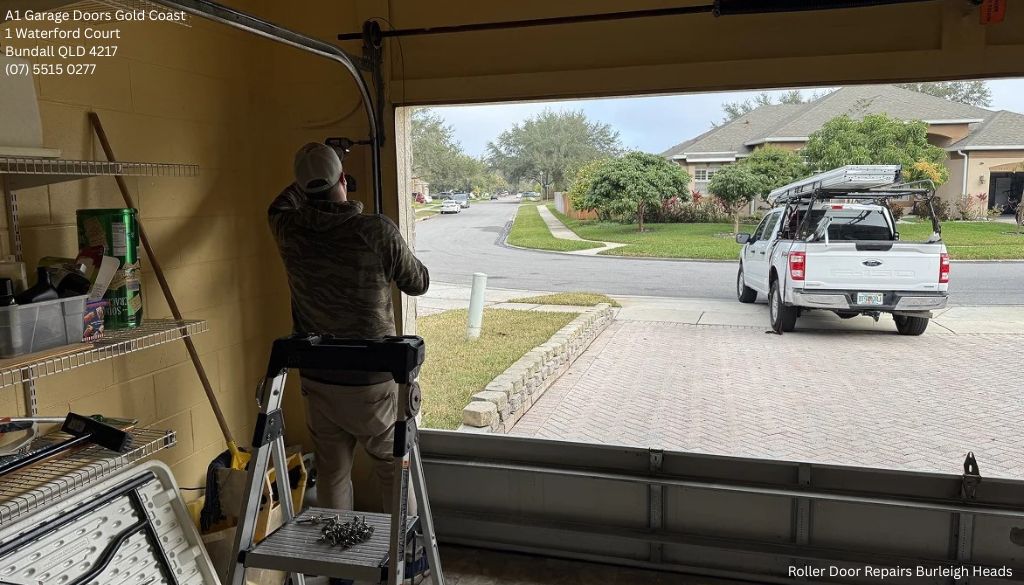
The threat depends on the door weight, whether one or both springs have fallen short, whether the wires are still seated on the drums, and whether the door areas are in good condition. If a wire has actually leapt a drum or an expansion spring has broken unevenly, raising the door can create it to rack in the tracks and jam hard. If you are under the door when that takes place, your margin for error disappears.
If unlocking is inescapable, relocate slowly, make use of enough assist, maintain hands far from pinch factors, and secure the door in the open placement with appropriate clamps on the tracks once it is elevated. Never depend on the opener or your own hold alone to hold it. Also after that, this is a last resort, not standard practice. In many cases it is safer and less expensive to wait for service than to run the risk of a fall or develop track damage.
Special issues in service, multi unit, and business properties
Owners of rental homes and commercial structures have a broader duty. It is not only your very own safety at risk. Renters, employees, suppliers, and shipment drivers may make use of the door without recognizing the warning signs.
For a single family members service, a door that really feels heavy or slams closed should be dealt with the same way as a defective stair rail or damaged lock, as a problem requiring punctual focus. A tenant might maintain running the door out of ease, specifically if they count on automatic accessibility. That enhances the opportunity of opener failure or injury.
Commercial garage door repair calls typically involve tighter routines and more web traffic around the opening. A service bay or storage facility might require prompt gain access to, however rate should not override lockout and location control. Forklifts, pedestrians, and trucks produce too many moving components for casual troubleshooting. If a business spring breaks, separate the door, tag it inactive, and generate a qualified service technician with the best training equipment and substitute stock.
The partnership in between springtimes and the garage door opener
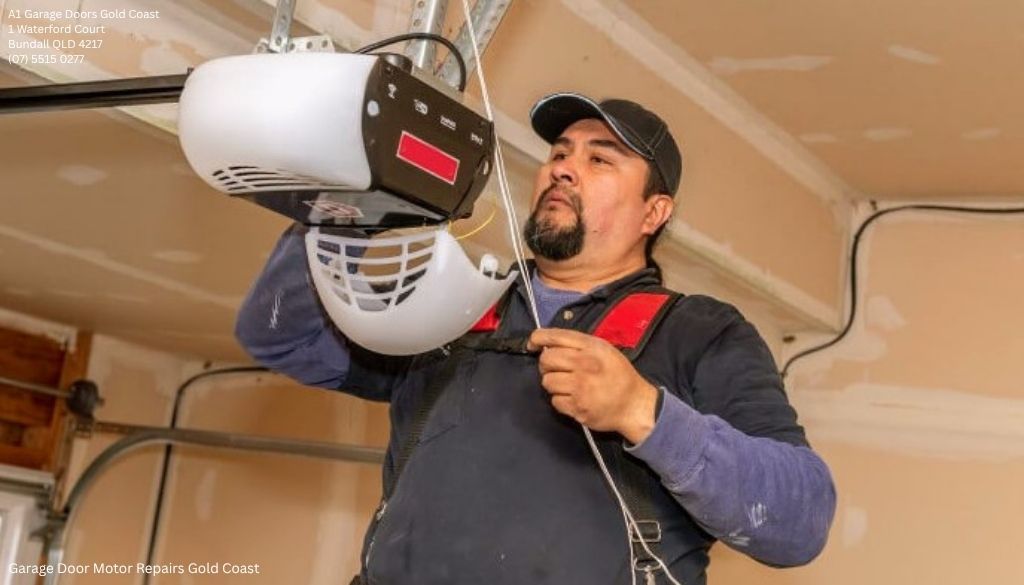
An usual misunderstanding is that the opener raises the complete weight of the door. It does not, at least not when the system is healthy. The springtime reverses the door, and the opener handles controlled movement. When springtimes are put on or broken, the opener ends up being a reluctant substitute.
That is why a damaged spring frequently shows up first as an opener complaint. The wall button functions intermittently. The electric motor hums. The carriage takes a trip, but the door hardly relocates. House owners then assume they require a new garage door opener, when the genuine problem is the counterbalance system.
There are cases where both hold true. An opener that has actually been transporting an out of balance door for months might have removed interior equipments, overheated, or curved the rail link on top section. Throughout property garage door repair, an excellent professional checks the opener after springtime replacement to make sure it is still running within regular pressure settings and take a trip limits. Changing the spring without recalibrating the opener can leave the system unreliable.
How experts approach springtime substitute safely
Professional springtime work is not secure due to the fact that professionals are courageous. It is much safer because the procedure is disciplined. The door is recognized properly, the springtime dimension is matched to the door weight and height, the hardware is inspected as a system, and the work area is controlled.
An experienced specialist will generally validate the door equilibrium, evaluate the shaft, drums, facility bearing, end bearing plates, joints, rollers, and cords, then set up springs with the proper wind and torque. Afterward, the door is tested manually prior to the opener is reconnected. If the door does not hold near mid travel or wanders noticeably, the equilibrium is dealt with before the task is thought about complete.
That procedure issues because the wrong spring can develop a false sense of success. A too strong springtime can make the door shoot up and stress the opener en route down. An also weak springtime leaves the opener doing too much job and can reduce its life. Correct Garage door spring replacement is as much regarding calibration as it has to do with swapping parts.
A few judgment calls that save money and trouble
Not every old door is worthy of significant spring work. Occasionally the best choice is a more comprehensive reset. If the bottom panel is decomposed, the track is curved, the sections are fracturing around the hinges, and the opener is nearing completion of its life, putting money right into bit-by-bit repair service may not be practical. In that situation, a complete garage door installment can deliver far better worth, quieter operation, boosted insulation, and updated safety and security features.
On the other hand, several doors with a damaged spring are or else healthy and only require top quality springtimes, fresh cables, and a tune up. I have actually seen twenty year old sectional doors return to smooth solution because the proprietor attended to the issue very early instead of running the opener till whatever else failed.
The trick is assessing the entire system, not infatuating on the loudest symptom.
Questions to ask prior to employing a fixing company
A trustworthy company should be comfortable reviewing spring type, cycle rating, warranty terms, and whether both springs need to be changed on a two springtime system. They need to additionally describe if extra components are put on and why those components matter.
Ask whether the specialist will stabilize the door by hand after installment. Ask whether the quote consists of labor, disposal of old springtimes, and opener adjustment if needed. If the door is industrial, ask whether the technology has experience with that said certain door design and operator configuration.
Price issues, however spring work is not a commodity. Very reduced rates in some cases suggests thin cycle springtimes, recycled equipment, or hurried adjustment. A slightly greater billing for correct sizing and cautious arrangement is usually more affordable over the life of the door.
The bottom line for owners
Garage doors recognize, which makes them simple to undervalue. The springtime system conceals its risk in simple view. That is why a lot of injuries happen during moments of self-confidence instead of moments of panic. A person sees a metal coil, a couple of braces, and a cable, and presumes perseverance suffices. Often it is not.
The best technique starts with recognition. If the door is heavy, loud, uneven, or opener reliant, stop treating it as a convenience thing and begin treating it as tools under tons. Safeguard the location, prevent improvisated repair services, and get a skilled collection of eyes on the full system.
For proprietors who take care of homes, rental units, shops, or storage facilities, this is not just a fixing issue. It belongs to accountable residential property treatment. Done appropriately, Garage door spring replacement restores secure procedure, secures the garage door opener, and protects against avoidable damages to the door itself. Done thoughtlessly, it can turn a convenient solution call into an emergency.
A well balanced garage door should move with shocking ease. If your own does not, pay attention to what it is informing you.